- Date
- 1952-07-10
- Eras
- Modern era
- Concepts
- conservationwildlifeanimalsgovernanceenvironmentheritage
Summary
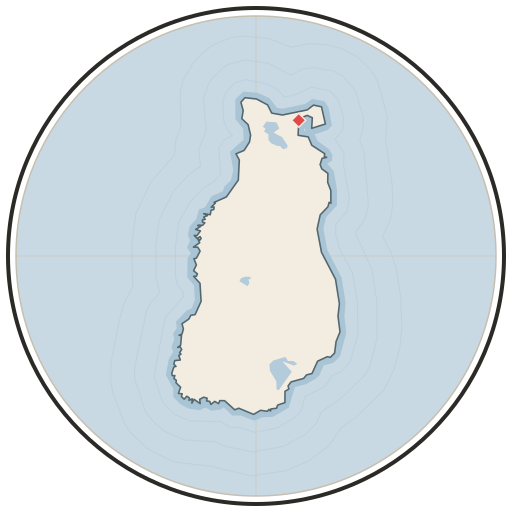
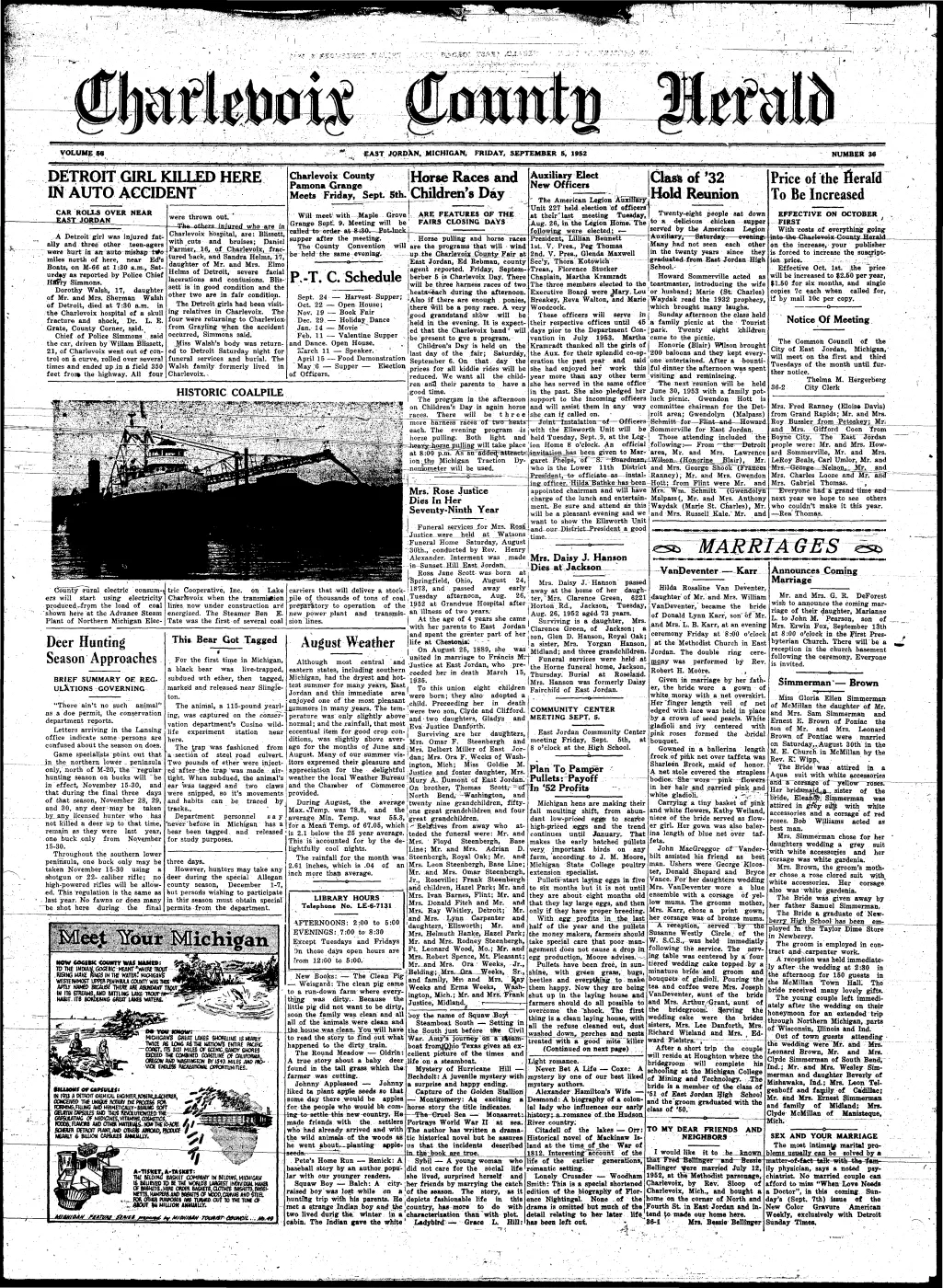
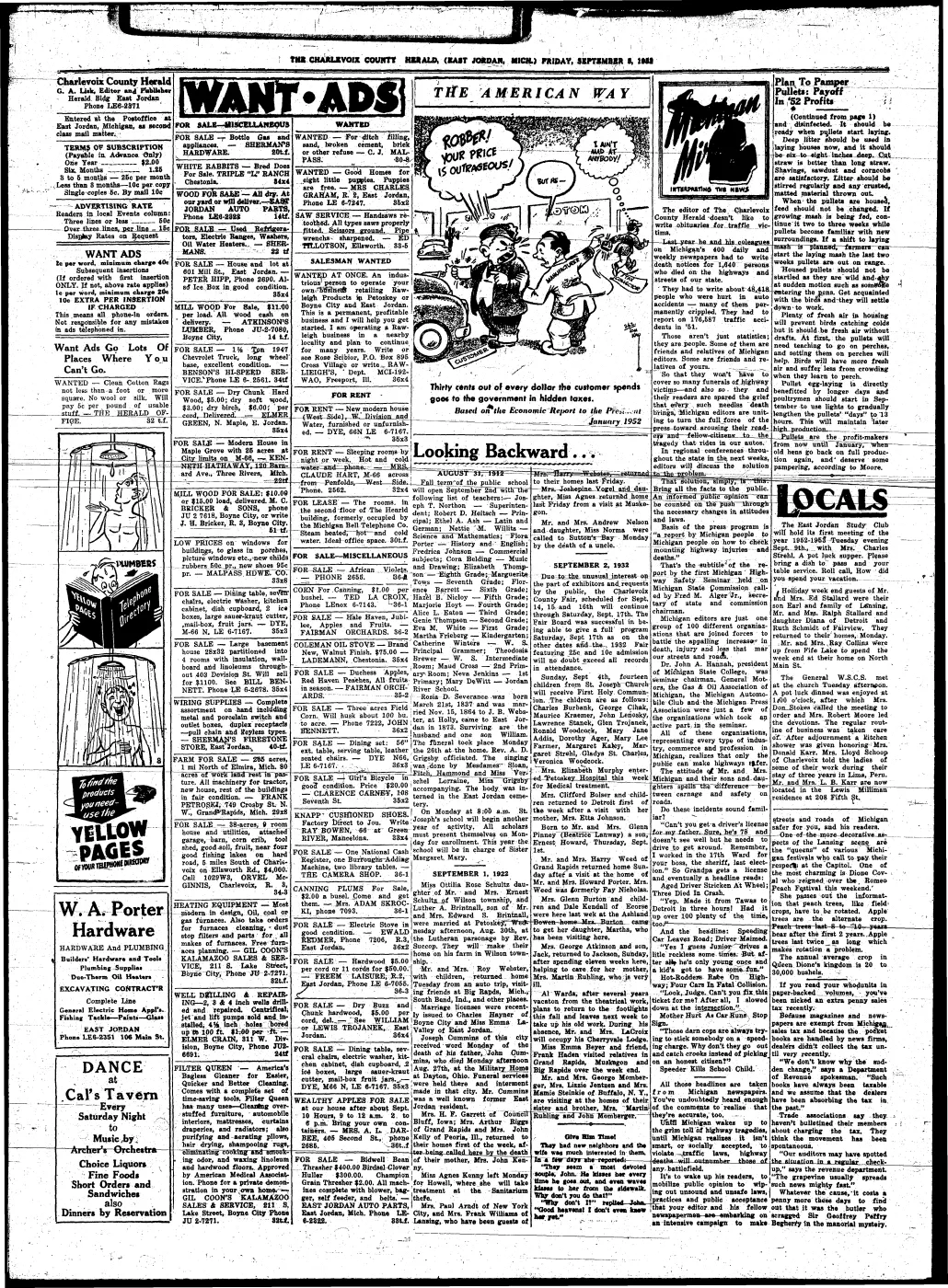
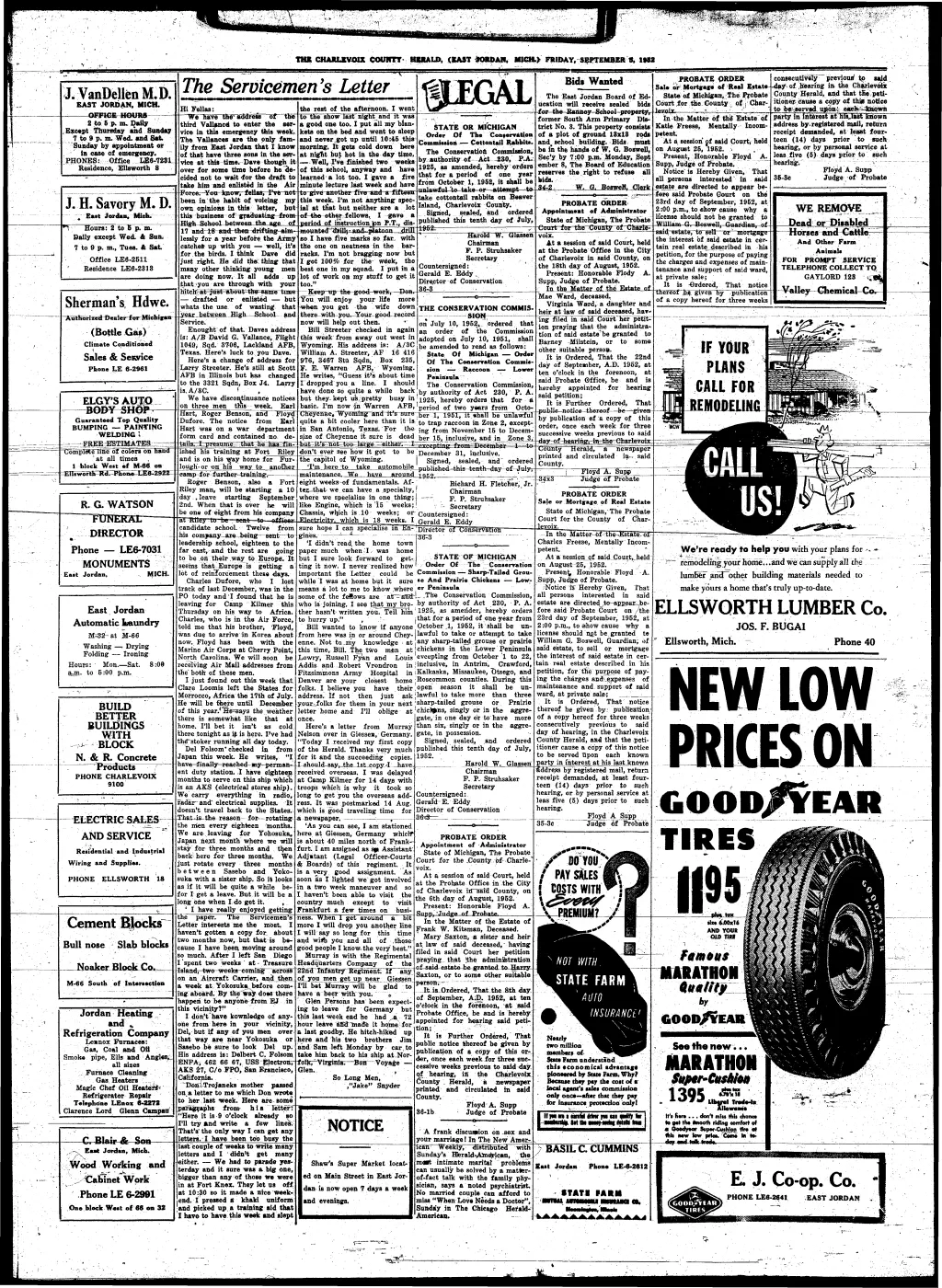
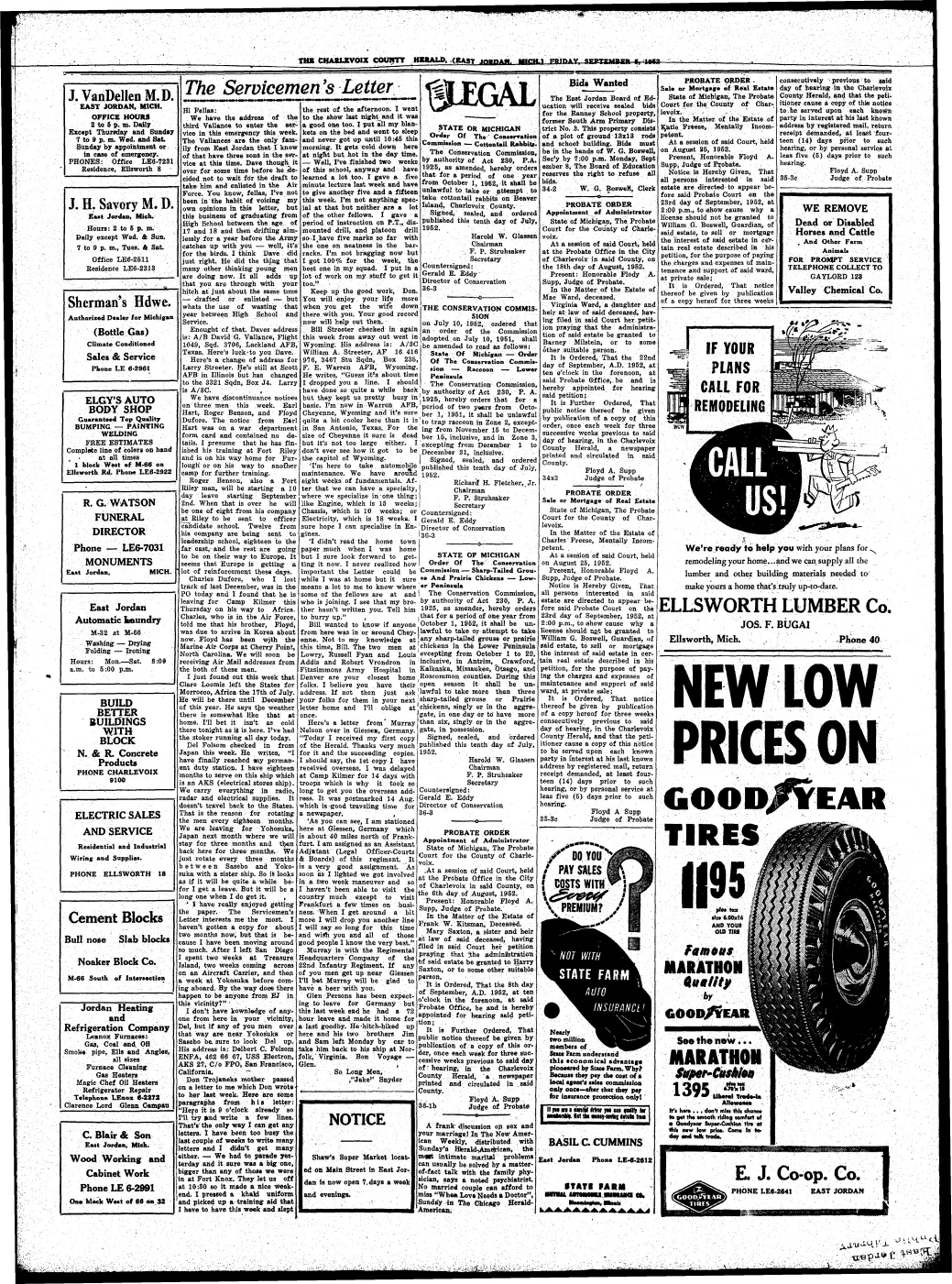
The September 5, 1952 Charlevoix County Herald printed a State of Michigan Conservation Commission order signed and ordered published on July 10, 1952. It made it unlawful to take or attempt to take cottontail rabbits on Beaver Island, Charlevoix County, for one year from October 1, 1952.1
The order names Harold W. Glassen as chairman, F. P. Struhsaker as secretary, and Gerald E. Eddy as Director of Conservation in the countersignature.1 It supplies a formal regulatory boundary for the cottontail-rabbit stocking history reported retrospectively in 1951 and for the closed rabbit season described in the 1950 account.
Authority and same-day orders
The order states its authority as “Act 230, P.A. 1925, as amended” — the Michigan statute under which the Conservation Commission issued its game orders. The same page of the September 5, 1952 Herald prints two other Commission orders signed and ordered published the same day, July 10, 1952, under the same statutory authority and bearing the same officers’ signatures: an amendment to a 1951 raccoon-trapping order covering Zones 2 and 3 of the Lower Peninsula, and a sharp-tailed-grouse-and-prairie-chicken order covering the Lower Peninsula generally, with a partial open season in six named counties.1 Unlike those two, the cottontail order names a single place — Beaver Island, Charlevoix County — rather than a zone or region, placing it alongside the 1938 deer and 1941 sharp-tailed-grouse orders as one of a small number of Commission orders this knowledge base holds that single out Beaver Island by name rather than regulating it as part of a larger zone.
The order’s one-year closure, beginning October 1, 1952, follows by about two years the cottontail-rabbit planting that the November 1951 Herald retrospective dates to 1950 as part of the Game Club’s stocking program. The timing is consistent with a closure meant to protect a recently stocked population, but the held sources do not state that connection explicitly, and this article does not assert a causal link the record does not make.
The order text was printed identically in the Herald’s September 5 and September 12, 1952 issues, consistent with the standard practice, seen elsewhere on the same page, of running a legal notice for multiple consecutive weeks.1
Evidence and limits
The issuance date is July 10, 1952, while October 1, 1952 is the stated effective date. The held newspaper does not provide the original order, the investigation behind it, or a precise expiration-day convention for the one-year period.
Open questions
- Did the cottontail closure expire without renewal, and what were the following seasons’ rules?
- What state records document the 1950 stocking and the order’s investigation?
- Can the commission’s minutes identify the full institutional and personal records behind the signatures?
See also
Footnotes
Read the document
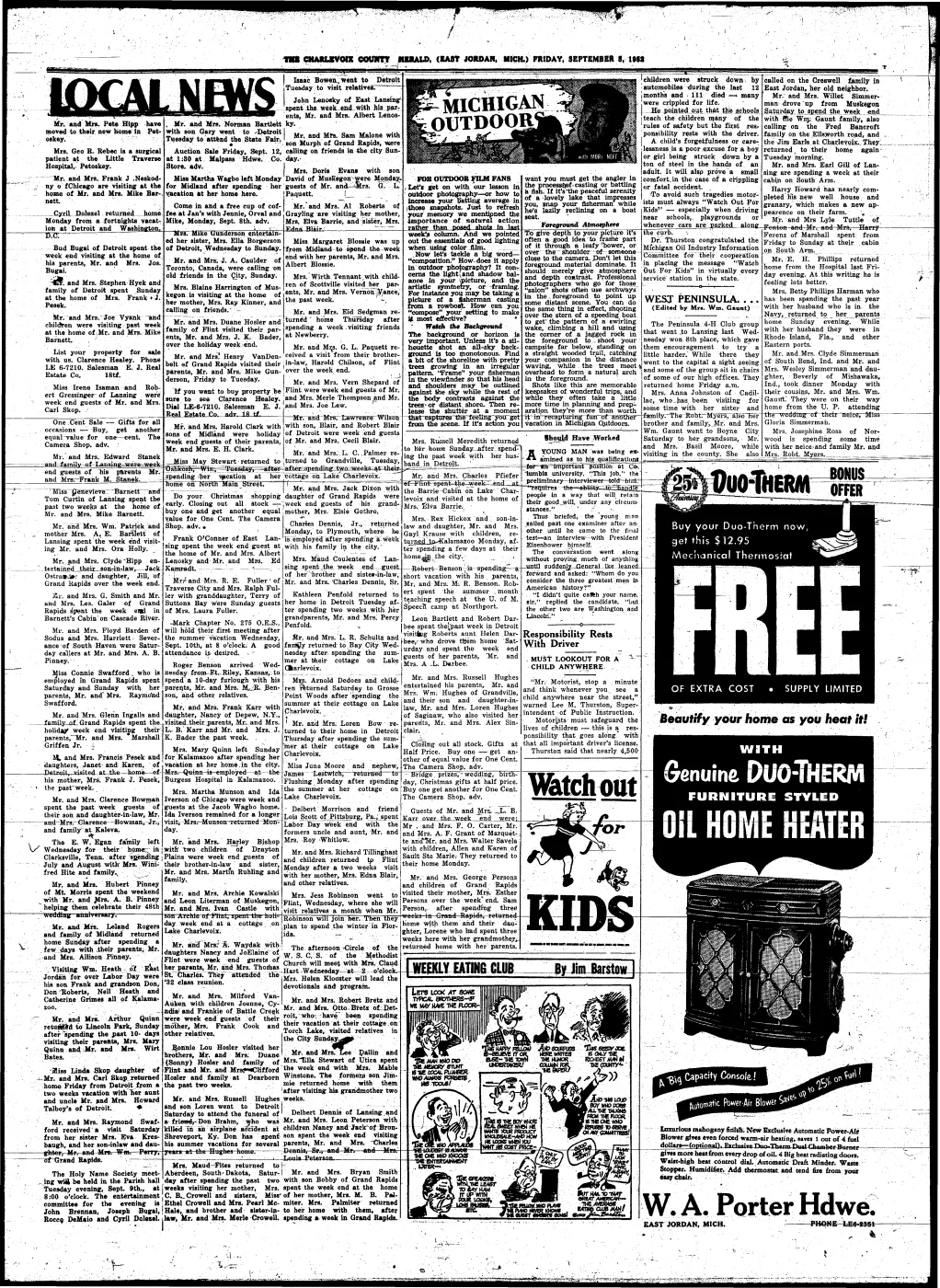
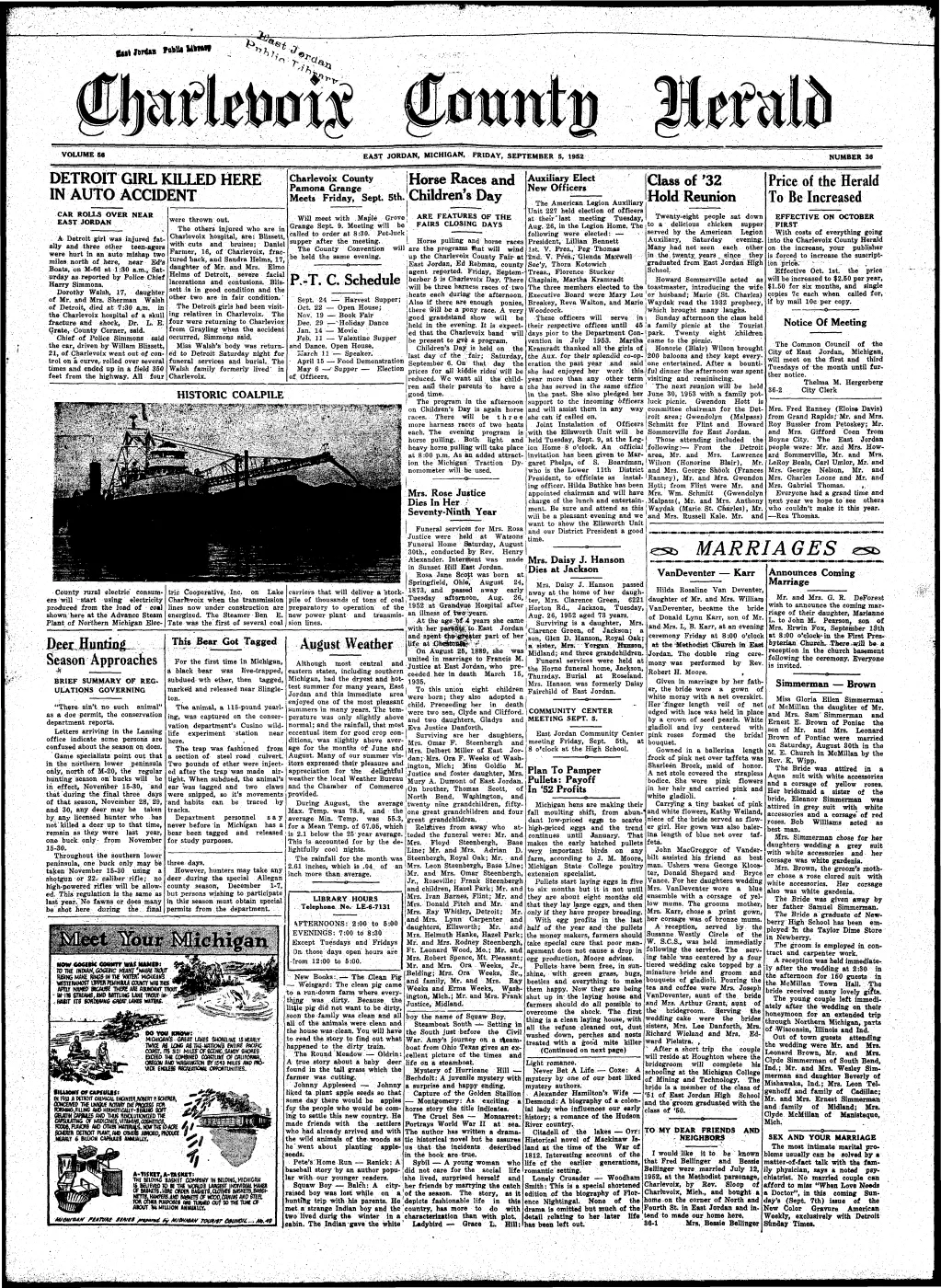
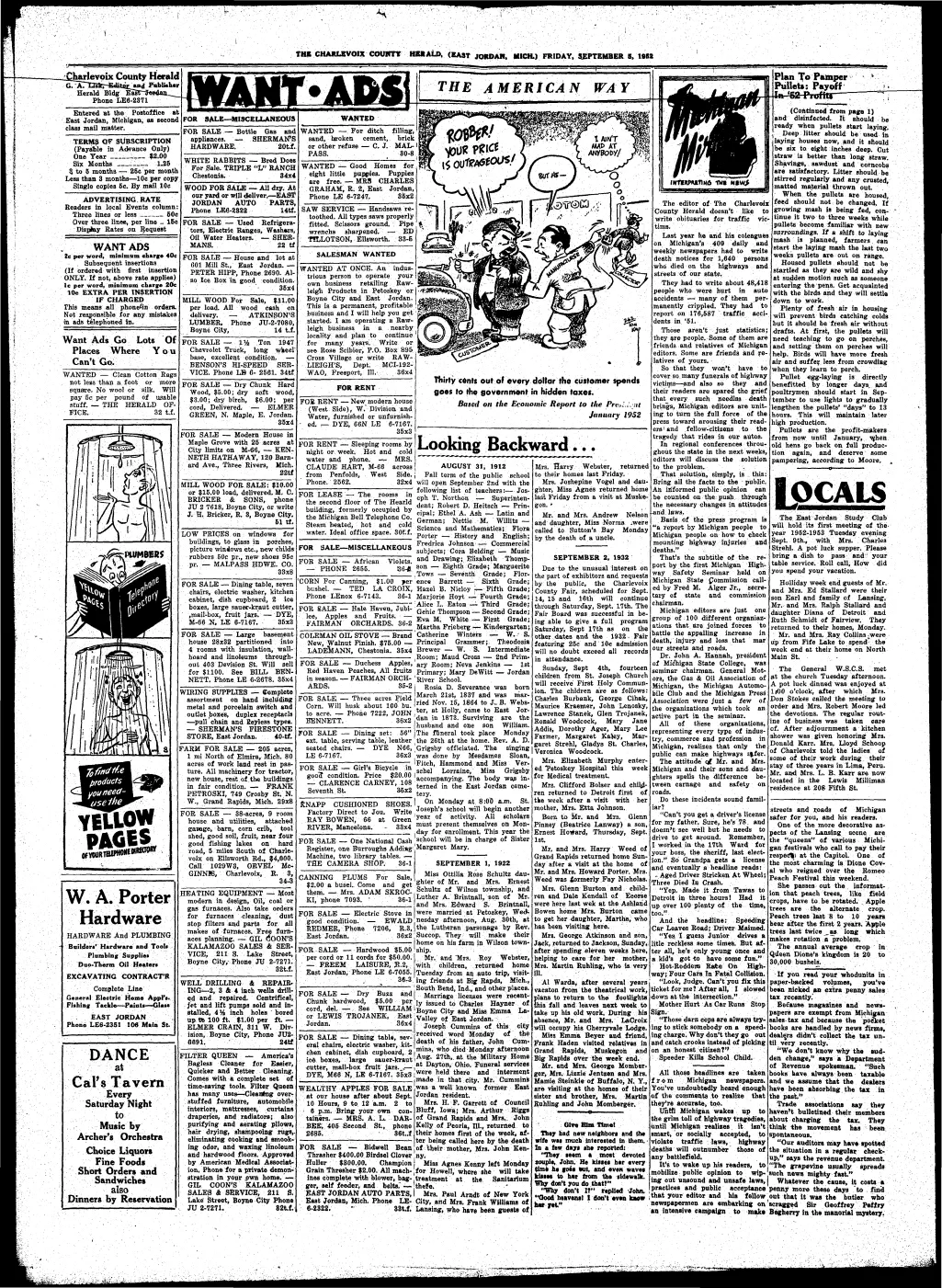
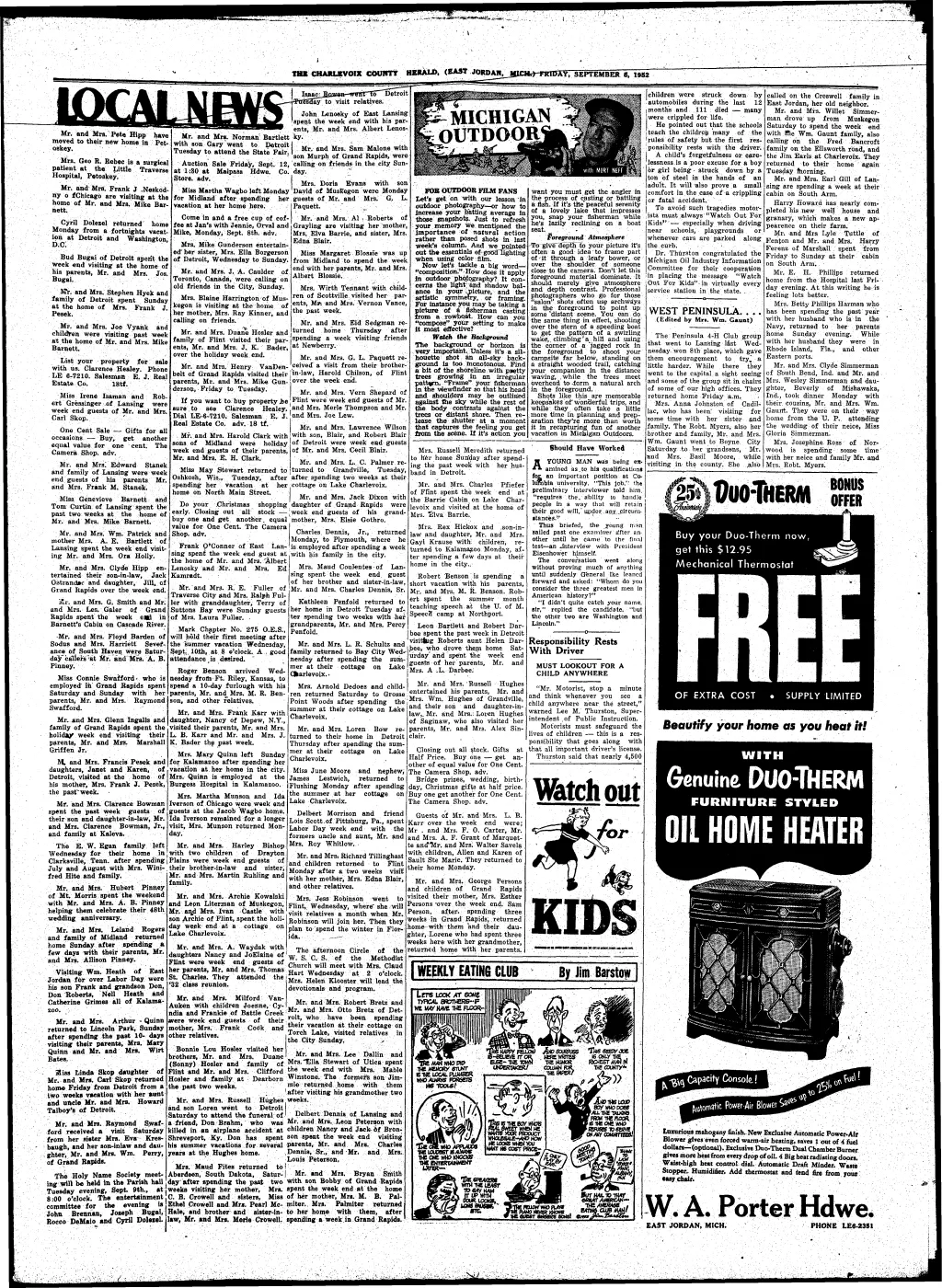
8 pages, rendered from the held scan.
Sources
- State of Michigan, Order of the Conservation Commission — Cottontail Rabbits, signed and ordered published July 10, 1952; Charlevoix County Herald, September 5, 1952.The order makes it unlawful to take or attempt to take cottontail rabbits on Beaver Island, Charlevoix County, for one year from October 1, 1952; signed by Harold W. Glassen, F. P. Struhsaker, and countersigned by Gerald E. Eddy. No public copy of this file is known; the archive holds one and can provide it on request.
- Held raw OCR preserves the printed legal order independently of the normalized Markdown rendering.
- Project research record for Beaver Island conservation orders, 1938–1952.Keeps the cottontail-rabbit order’s issuance date, effective date, one-year duration, signatories, and limits on stocking or enforcement outcomes in structured form. No public copy of this file is known; the archive holds one and can provide it on request.kb_research · beaver_island_conservation_orders_1938_1952
- Charlevoix County Herald, September 12, 1952, cottontail-rabbit order repeat publication.Reprints the identical July 10, 1952 order text, confirming republication across at least two consecutive weekly issues. No public copy of this file is known; the archive holds one and can provide it on request.
Added 1 August 2026 · revised 3 August 2026. Recent changes
Cite this article
Beaver Island Archive, “Michigan Conservation Commission Beaver Island Cottontail Rabbit Closure Order, 1952”, https://beaverislandarchive.org/documents/beaver-island-cottontail-rabbit-closure-order-1952/, accessed [date], citing State of Michigan, Order of the Conservation Commission — Cottontail Rabbits, signed and ordered published July 10, 1952; Charlevoix County Herald, September 5, 1952. (and 3 further sources listed on the page).
Last revised 2026-08-03. Fill in [date] with the date you read it — this page is static and cannot know that.
BibTeX for “Michigan Conservation Commission Beaver Island Cottontail Rabbit Closure Order, 1952”RIS for “Michigan Conservation Commission Beaver Island Cottontail Rabbit Closure Order, 1952”