- Dates
- 1923-02-03 – 1923-02-07
- Kind
- Medical
- Eras
- Modern era
- Concepts
- maritimeheritagecommunity
- Within
- Beaver Island
Summary
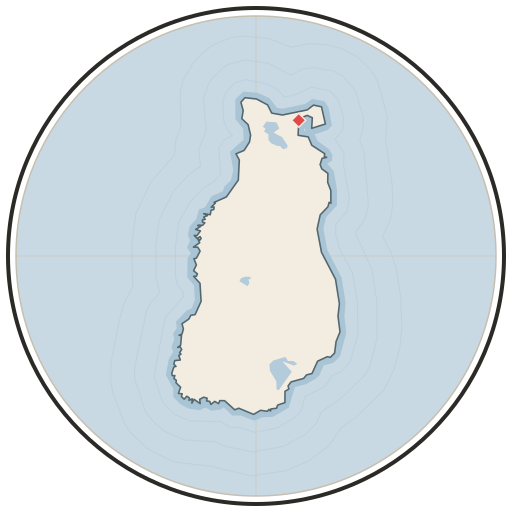
Jesse Cole, aged 18, suffered a fractured skull in a logging accident on Beaver Island on a Saturday in early February 1923. When treacherous ice prevented a mainland physician from reaching the island, an Army plane was requested. After the first aircraft was forced down by a snowstorm near Grayling, a second flight carried Lieutenant Meredith, mechanic Richard Schnobel, and Dr. Armstrong from Selfridge Field through Charlevoix and across the ice to the injured young man.
Evidence and limits
The February 9 issue supplies the weekday sequence but not numeric dates. The February 3–7 range is calendrical reconstruction from the Saturday injury, the Tuesday-night failed flight, and the Wednesday return, using the issue date as the anchor. The source does not identify the aircraft, Army unit, hospital, nurse, or the full names of Lieutenant Meredith and Dr. Armstrong. Jesse Cole is kept separate from other Cole records because the held report provides no family bridge.
Open questions
- Which Army unit and aircraft made the successful flight from Selfridge Field?
- What were Lieutenant Meredith’s and Dr. Armstrong’s full names?
- What was Jesse Cole’s recovery and later life on or beyond Beaver Island?
- Can medical, township, or newspaper records identify the logging accident site?
See also
Sources
- Recounts Jesse Cole’s logging injury, the emergency call for Dr. Armstrong, Lieutenant Meredith’s flight to the frozen lakes at Charlevoix and Beaver Island, and Cole’s survival; it is a later newspaper historical account. The holding institution's portal restricts automated access; the archive holds a copy of this issue and can provide it on request.data1 · beaver-island-archive · beaver_beacon · 1997-02_Beaver-Beacon
- The held issue scan confirms the historical medical-flight reprint.data1 · beaver-island-archive · scans · beaver_beacon · issues · 1997-02_Beaver-Beacon
- Charlevoix County Herald, February 9, 1923, “Army Plane Comes North.”Reports Jesse Cole’s Saturday logging injury, failed efforts to cross the ice for a physician, the first Army plane’s forced landing near Grayling, the successful second flight, Lieutenant Meredith and Richard Schnobel’s flight from Selfridge Field, Dr. Armstrong’s pickup at Charlevoix, and the twenty-mile ice crossing to Beaver Island. No public copy of this file is known; the archive holds one and can provide it on request.
- The held raw OCR preserves the same medical-flight report independently of the normalized Markdown rendering.
Added 1 August 2026. Recent changes
Cite this article
Beaver Island Archive, “Army Plane Medical Flight to Beaver Island”, https://beaverislandarchive.org/events/army-plane-medical-flight-to-beaver-island-1923/, accessed [date], citing Beaver Beacon, February 1997, “First Airplane Flight to Beaver Island — February 7, 1923.” (and 3 further sources listed on the page).
Last revised 2026-08-01. Fill in [date] with the date you read it — this page is static and cannot know that.
BibTeX for “Army Plane Medical Flight to Beaver Island”RIS for “Army Plane Medical Flight to Beaver Island”