- Date
- 2000-10
- Kind
- Education
- Where
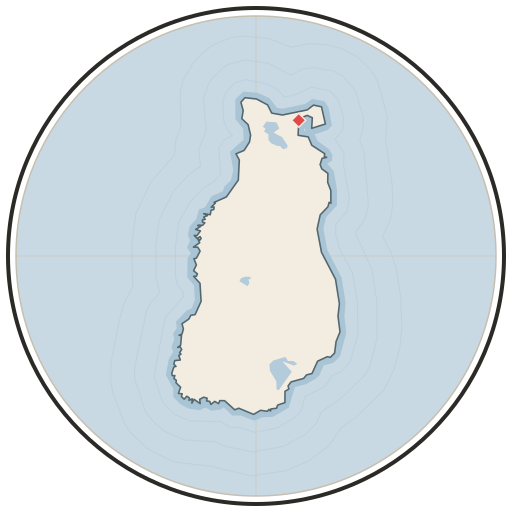
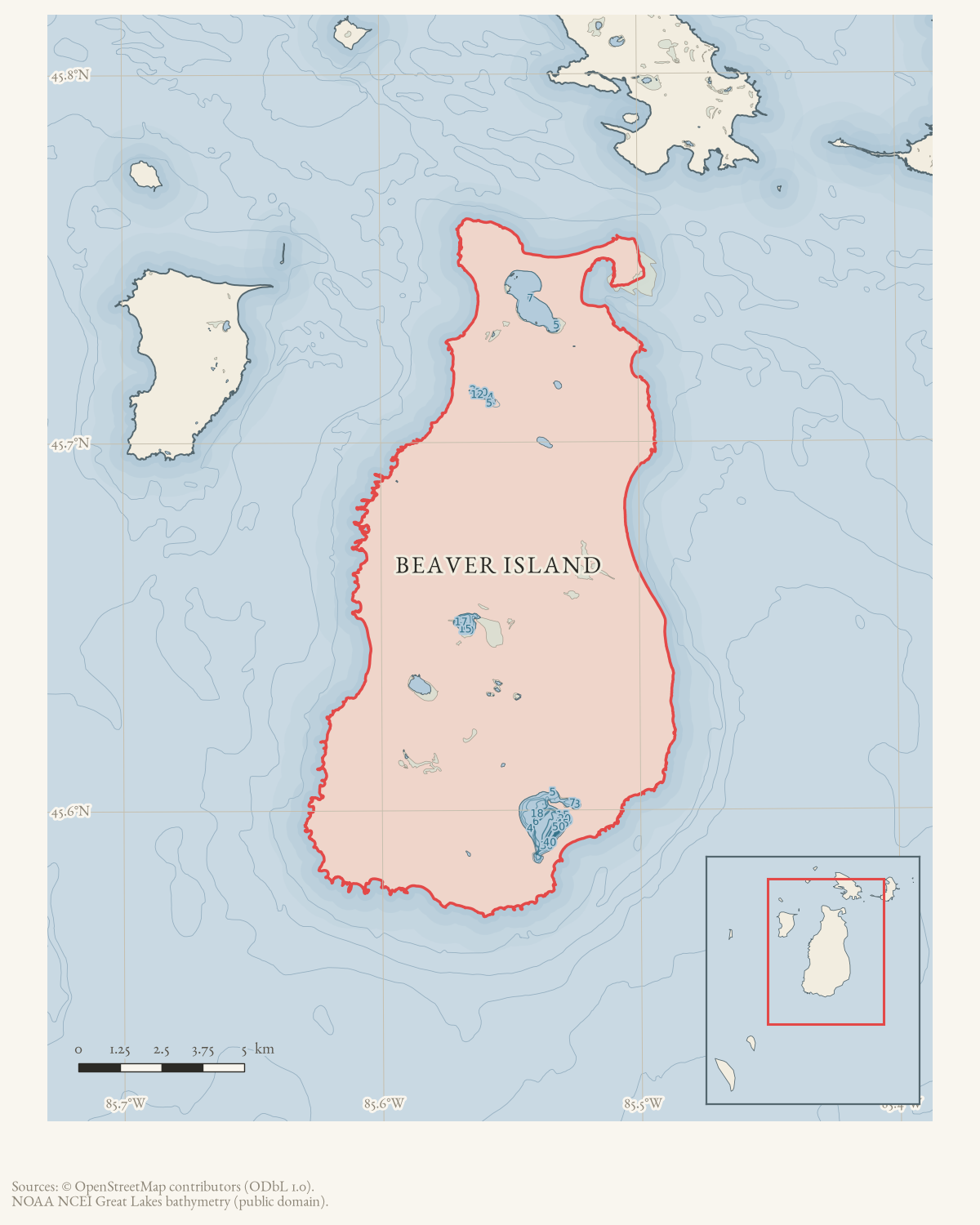
- Beaver Island
- Eras
- Modern era
- Concepts
- hydrologyenvironmentsciencepublic-servicecommunication
- Within
- Beaver Island
Summary
The October 2000 Beaver Beacon published Tip of the Mitt Watershed Council guidance explaining that surface tension, organic substances, surfactants, and algae can create foam on lakes and streams. The article says most observed foam is naturally produced and harmless, while acknowledging some human sources.
Evidence limits
This is reprinted watershed education, not an investigation of a particular Beaver Island foam event or a site-specific water-quality test.
Sources
- Tip of the Mitt Watershed Council explains surface tension, surfactants, algae, and human sources of foam, and says most observed foam is the result of harmless natural circumstances. The holding institution's portal restricts automated access; the archive holds a copy of this issue and can provide it on request.data1 · beaver-island-archive · beaver_beacon · 2000-10_Beaver-Beacon
- The held issue scan confirms the watershed guidance article.data1 · beaver-island-archive · scans · beaver_beacon · issues · 2000-10_Beaver-Beacon
Added 6 August 2026. Recent changes
Cite this article
Beaver Island Archive, “Watershed Council explains natural foam on northern Michigan lakes and streams in October 2000”, https://beaverislandarchive.org/events/beaver-island-foam-on-lakes-and-streams-guidance-2000/, accessed [date], citing Beaver Beacon, October 2000, “Foam on Lakes and Streams.” (and 1 further source listed on the page).
Last revised 2026-08-06. Fill in [date] with the date you read it — this page is static and cannot know that.
BibTeX for “Watershed Council explains natural foam on northern Michigan lakes and streams in October 2000”RIS for “Watershed Council explains natural foam on northern Michigan lakes and streams in October 2000”