- Concepts
- historiographyheritageStrang eramormonism
- Within
- Beaver Island archipelago
Summary
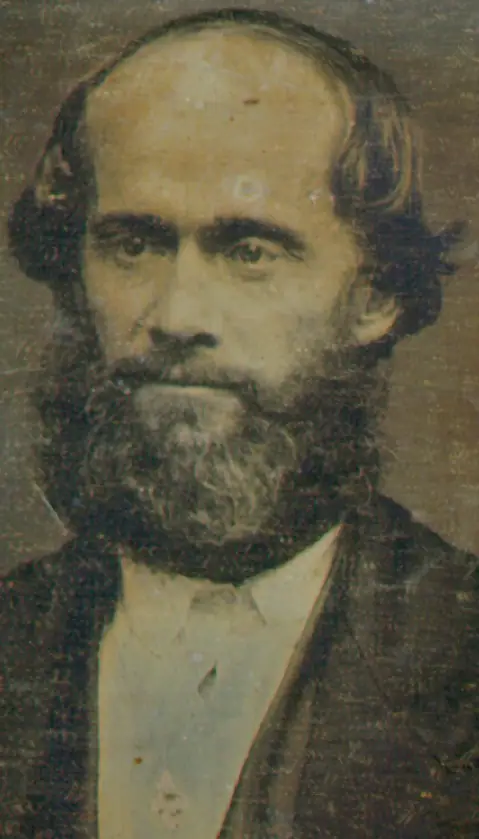
Beaver Island’s history has been written almost entirely as the history of one man, by people with something at stake. The contemporary record splits into Strang’s own press and a hostile mainland press; the modern literature splits into a scholarly narrative (Quaife, 1930), an explicit vindication (Fitzpatrick, 1970), and a run of popular biographies. There is no neutral vantage point in the sources, so this survey’s approach is to attribute rather than adjudicate.
There is also a hard practical line at about 1930. Everything through Quaife’s Yale study is out of copyright, and it is held here in full text. Nearly everything after it is in copyright, and only catalogue records are held here. That line is invisible in a bibliography and decisive in practice: the older, more partisan material is the material that is searchable here, and the later, more critical scholarship is not.
The contemporary record
Strang’s press. The kingdom published continuously. The Voree Herald ran from January 1846 to 6 June 1850 — 180 numbers, at Voree, Elkhorn, Southport, Ottawa (Illinois) and New York City. Its successor, the Northern Islander, was established at Saint James and ran from 12 December 1850, ninety weekly issues, plus thirty-three numbers of a daily edition begun 1 April 1856. The last daily, 20 June 1856, carries the account of the shooting and a note suspending publication. All of those counts are Quaife’s, taken from Strang’s own summary of his publications in the Northern Islander of 24 January 1856.1
Quaife is blunt about what these papers are: “Both Voree Herald and Northern Islander were, of course, personal organs of the Prophet, conceived primarily for the promotion of his designs.” He is equally clear that they are indispensable — “The Northern Islander was the first newspaper published in northern Michigan. Everything considered, it was a surprisingly good paper.”2
Note the trap: two different papers are called the Northern Islander. Strang’s (1850-56) and the Beaver Island Historical Society’s community newspaper (2024- ). A hit on the modern one proves nothing about the 1850s.
Strang’s books. Ancient and Modern Michilimackinac (1854) is simultaneously a regional history, a settler’s gazetteer and a legal brief for the defence. Its title page advertises “an account of the controversy between Mackinac and the Mormons.” It is the best single source for the island’s geography, economy and toponymy in the 1850s, and every paragraph of it is arguing something.
The mainland press. The mainland and national papers ran the kingdom as a scandal serial. The most useful thing about them for a modern reader is that they can be checked. See the worked example below.
The survival problem. Almost nothing survived the expulsion. Quaife records that 320 copies of the Book of the Law of the Lord were printed and still lay unbound in the printing office at Saint James when “the mob descended upon the place and made spoil of everything the Saints possessed, and the library and royal press of King Strang suffered the treatment meted out by the Moslems of old to the library of Alexandria.”3 Of the thirty-three daily Islanders, “copies of only one or two are known still to exist.”2 No complete file of either paper existed in 1930. Quaife’s own access came from Wingfield Watson, a Strangite who had lived on the island 1852-56 and whose private run was lent to him; photostats went to the Wisconsin Historical Society and the Burton Historical Collection only in the late 1920s.
Two consequences follow. The surviving record is a survivorship sample curated by the losing side’s most committed adherent, and Quaife’s footnotes are frequently the only citation for documents no one can now consult.
Reading the hostile press: a worked example
The Bismarck Tribune of 30 July 1873, page 3, reprints Laura Ream’s letter to the Cincinnati Commercial under the heading “Strang’s Mormons. A History of the Renegade Saints Who Went to the Island of Big Beaver, in Lake Michigan.” It is a good specimen because its structure is typical and its errors are checkable.4
The whole account is delivered as the oral testimony of a steamer pilot pointing at the shoreline. He supplies vivid detail — the position of Strang’s house, the woodpile the assassin hid behind, the “Mormon doctor” who “stood next to Strang in ability and rank, and was a sort of vice-king” — and delivers the verdict: “They were nothing but pirates and outlaws, anyhow.”
Now check it. The pilot says Strang “did not die for six months”, and that during those months he put away his four wives and sent for his legal wife, who nursed him. Strang was shot on 16 June 1856 and died on 9 July — twenty-three days, not six months. The pilot says the assassin “was acquitted”; he says the Mormons were given “two years to leave” and driven out at the end of it, compressing an expulsion that took weeks. Every one of these is the kind of error that oral transmission produces: the shape is right, the durations are wrong, and the moral frame is supplied in advance. The two-year figure is the pilot’s own: the paper has the neighbouring islanders serving “a notice on the Mormons, giving them two years to leave”, after which “the fishermen arose in force”.4
The rule this yields is general. Nineteenth-century press accounts of Beaver Island are usually reprints of reprints of an anecdote, and the more colourful the detail, the further it is likely to be from the source. Where they can be checked against a date, they often fail.
A gentler variant is the travel letter. The Rock Island Argus of 12 April 1912 closes its account of the island with “There is no sickness … There is no strenuous strife … There is no crime … Neither is there profanity, religious controversies, nor race suicide … Blessed Beaver Island!” The same article contains the best independent description held here of the surviving Strang toponyms and of the narrow-gauge logging railway. Sentimentality and accurate observation sit in the same paragraph, and have to be separated by hand.
Quaife, 1930
Milo M. Quaife was Secretary of the Burton Historical Collection in Detroit. The Kingdom of Saint James: A Narrative of the Mormons was published by Yale University Press on the Amasa Stone Mather Memorial Publication Fund. It remains the pivot of the literature: the first study built from the Strangite documents themselves, with appendices printing Strang’s diary, Joseph Smith’s letter of appointment, Orson Hyde’s revelation against Strang, and a selection of Northern Islander articles.
Its most valuable single chapter for a modern researcher is Appendix I, “Sources of Information”, which is a historiographical essay: what was published, what survived, where it is, and how much of it can be trusted. Quaife’s general verdict on the field, stated without qualification, is that “practically everything written about the doings of the Mormons” is “partisan and propagandist in character.”5
Quaife’s own position is not neutral either. Describing the expulsion he breaks off to quote, at length and approvingly, “a modern historian of Michigan” — Byron M. Cutcheon — for whom the July day when “helpless women and innocent children were driven into exile … still remains, and we trust it may always remain, the most disgraceful day in Michigan history”; Quaife then continues in his own voice about the “American citizens who were thus driven into exile”.6 The verdict is Cutcheon’s; the decision to give it that much room is Quaife’s. A reader should register that he is sympathetic to the expelled, that this is the opposite of the contemporary press’s bias, and that both are still biases.
After 1930: the copyright wall
The literature continues, and almost none of it is available here.
Of 110 Internet Archive items catalogued for the archipelago, full text is held for 57. Every pre-1931 imprint of substance about Beaver Island is among them — Strang’s own works (1848-1854), the Strangite serials, Williams (1905), Quaife (1930).
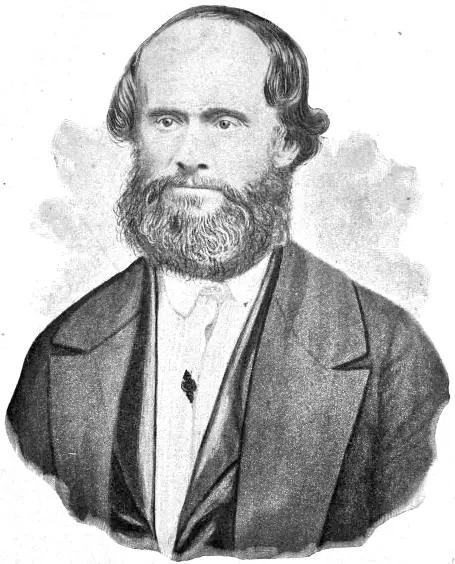
The forty-three catalogued items dated after 1930 are held as citations only. They include:
| Year | Author | Title |
|---|---|---|
| 1958 | Margaret S. Cronyn | The Saga of Beaver Island |
| 1970 | Doyle C. Fitzpatrick | The King Strang Story: A Vindication of James J. Strang, the Beaver Island Mormon King |
| 1988 | Beaver Island Historical Society | The Journal of Beaver Island History |
| 1988 | Roger Van Noord | King of Beaver Island: The Life and Assassination of James Jesse Strang |
| 1997 | Roger Van Noord | Assassination of a Michigan King: The Life of James Jesse Strang |
| 2005 | Gerry Volgenau | Islands: Great Lakes Stories |
| 2020 | Miles Harvey | The King of Confidence: A Tale of Utopian Dreamers, Frontier Schemers, True Believers, False Prophets, and the Murder of an American Monarch |
Fitzpatrick’s subtitle does the reader an unusual courtesy: “a vindication”. It announces its own position on the title page, which is more than the contemporary press ever did.
The practical effect of the wall is a systematic bias in what can be quoted here. Search for any question about Strang and the answers come back from Strang, from his enemies, and from Quaife. The seventy years of scholarship that would qualify all three are catalogued and unreadable here. That is a property of the collection, not of the field, and every article here is subject to it.
How to read the sources: a checklist
- Ask who paid for the page. Strang’s press, a Strang son’s contribution to a resort souvenir book, a hostile Mackinac trader, a Yale fund, a family vindication — all of these are on the table, and all are usually visible in the front matter.
- Apply a date floor of ~1843 to any name search for Strang. A different, unrelated Jesse Strang was tried at Albany in 1827 for the murder of John Whipple, and forty-six pages of 1827-1834 newspaper coverage held here are that case. James Strang was fourteen.
- Search with word boundaries. A bare substring search for the surname matches “strange” and “stranger” throughout ordinary prose.
- Confirm the Great Lakes context. “Beaver Island” is not a unique place name. Two of five donated PDFs checked here matched on the name alone and turned out to concern the Niagara River and Nova Scotia respectively — the latter with a Hog Island and a Gull Island as well.
- Distinguish the two Northern Islanders.
- Search historical sources under the old names. Squaw Island, Mount Pisgah Bay, Isle du Castor. See Strang's biblical toponyms.
- Check OCR against the page image before quoting. Quality varies enough to change quotations; the Sawyer (1911) scan in this collection has severe word-order scrambling within lines, which produces plausible-looking and wrong “quotations”.
- Treat a zero as a claim about the dataset until proven otherwise. The absence of shipwrecks in the state preserve layer, and of Anishinaabe residents from the 1850 census, are both artefacts of how the data was made.
Open questions
- Is there a Strangite counter-historiography? The Prophetic Controversy appears here in editions of 1878, 1886 and 1893, kept in print by the surviving church long after the kingdom fell. How the Strangite tradition wrote its own history after 1856 has not been examined.
- What did Cronyn (1958) and Fitzpatrick (1970) actually argue? Both are named in this article from catalogue metadata alone. Fitzpatrick’s subtitle states his position but not his method or evidence.
- Where is the Watson file now? Quaife used a private run of the Northern
Islander lent by Wingfield Watson, who died in 1923, with photostats made for
the Wisconsin Historical Society and the Burton Historical Collection. The
Internet Archive item held here (
NorthernIslander18501856) may derive from one of those photostat sets; its provenance has not been traced. - Anishinaabe historiography. No source held here on the archipelago’s Indigenous history was written by an Anishinaabe author before the modern Northern Islander’s Anishinaabek column. See Anishinaabe presence in the archipelago.
- Local history outside the Strang frame. The Journal of Beaver Island History (Beaver Island Historical Society, 1988) is exactly the kind of publication that would cover fishing, farming and families rather than the kingdom. It is catalogued and not held.
See also
Footnotes
-
Quaife, The Kingdom of Saint James, p. 185, citing the Northern Islander of 24 January 1856 for Strang’s own account of his publications. ↩
-
Quaife, The Kingdom of Saint James, p. 189. ↩
-
Laura Ream, letter to the Cincinnati Commercial, reprinted in the Bismarck Tribune (Bismarck, D.T.), 30 July 1873, p. 3. ↩ ↩2
-
Quaife, The Kingdom of Saint James, Appendix I, “Sources of Information,” p. 184. ↩
-
Milo M. Quaife, The Kingdom of Saint James: A Narrative of the Mormons (New Haven, Yale University Press, 1930), p. 174, quoting Byron M. Cutcheon, Michigan as a Province, Territory, and State, III, 308-309. ↩
In the sources
Helen Collar (1911–1995) spent four decades transcribing Beaver Island census returns, parish registers, deeds and death records onto index cards, and recording what islanders told her. Clarke Historical Library publishes that work. It is a researcher's working file — what a record says, what she suspected, and what an informant remembered, often in the same paragraph — so what follows is what the archive holds, not what this archive claims.
Collar wrote a general account of this subject: Beaver Island — a general history. A secondary account in her own words, cited as hers; where she names a source, cite that instead.
Collar's own overview; a secondary account, cited as hers.
These are Collar's twentieth-century working notes. They preserve the language of her informants and of her period, including racial descriptions of Anishinaabe residents, and they are quoted verbatim because altering a transcription silently would be worse. See the register of dated records for what the parish registers record, and the editorial standards for what this archive will and will not turn a transcription into.
Sources
- A forwarded account presented religious and constitutional claims about the Washington Monument; participants then debated belief, tolerance, and historical interpretation. This is popular-history circulation and source criticism, not an authoritative account of the monument or constitutional history.forum · www.beaverislandforum.com · 00 · t000513
- A participant used a forum image and family memory to identify or contextualize Joe M. Fro, while comparing an older photograph with a later recollection. The identity and date remain unverified image-history leads.forum · www.beaverislandforum.com · 00 · t000303
- A participant forwarded a long list of historical, scientific, linguistic, and cultural claims without citations. The thread is evidence of popular-fact circulation and informal source use; its individual claims require independent verification.forum · www.beaverislandforum.com · 00 · t000267
- A proposed theatre project used Historical Society journals alongside personal memories, music, and island experience. This is evidence of local-history research practice, not an independently verified account of the island’s past.forum · www.beaverislandforum.com · 00 · t000250
- Participants circulated election reporting and commentary, while the administrator distinguished isolated voting-machine irregularities from evidence sufficient to change the result. This is a source-discussion record, not an official audit or definitive account of the 2004 election.forum · www.beaverislandforum.com · 00 · t000237
- A participant explicitly attributed the sayings to island residents or visitors and assembled memories of landmarks, customs, local personalities, dances, and earlier community life. This is oral/community memory as preserved in a forum, not independently verified local history.forum · www.beaverislandforum.com · 00 · t000230
- A participant flagged typographical errors in a Beaver Beacon political advertisement, and the Beacon acknowledged responsibility. This is evidence of a published-source correction and local reader scrutiny, not a correction to the advertisement’s substantive political claims.forum · www.beaverislandforum.com · 00 · t000212
- The thread contains an explicit correction of a falsely attributed Andy Rooney text, including a link to a fact-checking page. It is useful evidence of community source criticism; the forwarded text is not adopted as Rooney’s work.forum · www.beaverislandforum.com · 00 · t000199
- A participant identified a Morning Sun feature about Great Lakes islands and Beaver Island but did not reproduce it. This is a source-discovery lead; the newspaper article itself must be consulted for historical claims.forum · www.beaverislandforum.com · 00 · t000190
- A student described finding substantial material on Protar in the Journal of Beaver Island History books and using a house visit and photographs for a school essay. This is evidence of local-history research use and access, not a substitute for the cited books or primary sources.forum · www.beaverislandforum.com · 00 · t000147
- A descendant used a possible photograph in an Irish-history book and forum referrals to pursue a Beaver Island genealogy question. The image identification and residence claim remain unverified research leads.forum · www.beaverislandforum.com · 00 · t000155
- A forum participant initially attributed a widely circulated reflection to George Carlin; another checked Carlin's website and reported that he disclaimed authorship. This is a small but explicit example of community-level provenance correction, not evidence about Carlin beyond the linked attribution dispute.forum · www.beaverislandforum.com · 00 · t000074
- A participant asked whether Beaver Island ever had vineyards, breweries, or wineries. This is an open historical question and research lead, not evidence that such enterprises existed.forum · www.beaverislandforum.com · 00 · t000417
- A participant referred readers to a same-day Traverse City Record-Eagle headline concerning Beaver Island. The newspaper is the stronger source for the underlying report; the forum documents local circulation without identifying the article's contents.forum · www.beaverislandforum.com · 00 · t000620
- A participant offered a personal recollection of witnessing placement of a copy of *The Book of the Law of the Lord* in 1979. The claim is preserved as an unverified research lead; it does not establish a location, surviving copy, or Strangite record.forum · www.beaverislandforum.com · 00 · t000617
- A participant forwarded a long collection of purported 1906 U.S. statistics and social facts. The thread is useful evidence of popular-history circulation, but the claims are not adopted as historical facts without source-by-source verification.forum · www.beaverislandforum.com · 00 · t000639
- The thread circulated a narrative about the Star-Spangled Banner attributed to Isaac Asimov and included a participant's personal connection to Fort McHenry. It documents patriotic-history circulation and memory, not an authoritative anthem history; the reproduced narrative requires independent checking.forum · www.beaverislandforum.com · 00 · t000636
- The thread circulated external Charlevoix County and early Charlevoix history pages and praised their usefulness for revisiting local history. The forum is evidence of community research practice and source discovery; the linked pages must be checked directly for historical claims and provenance.forum · www.beaverislandforum.com · 00 · t000813
- A descendant shared a damaged photograph believed by family tradition to depict a Beaver Island store; participants debated the flag, building materials, objects, and location, with several explicitly questioning the island identification. The image and family testimony are leads for research, not proof of a Beaver Island building, date, proprietor, or flag interpretation.forum · www.beaverislandforum.com · 00 · t000983
- The topic pointed readers to a scanned Charlevoix Courier island article hosted through the forum. The forum establishes that the item circulated among participants; the original newspaper image is stronger evidence for its historical claims, and the archived thumbnail is not treated as independently transcribed text.forum · www.beaverislandforum.com · 01 · t001064
- A forum participant attempted to identify the pseudonymous BI Pirate from biographical and property clues; the reply did not establish the person's identity. This is an unverified identity speculation and is not used to identify a person or merge records.forum · www.beaverislandforum.com · 14 · t014018
- Described in this archive: The Kingdom of Saint James, Quaife, 1930.A historiographical essay in its own right: the Voree Herald and Northern Islander runs and their survival, the printing of the Book of the Law of the Lord, Wingfield Watson's private file, and Quaife's judgment that the whole literature is partisan.
- Described in this archive: Ancient and Modern Michilimackinac, 1854.Strang's own history, gazetteer and legal brief in one volume. The project holds three separate digitisations of the 1854 edition.
- *Northern Islander* (Saint James, Beaver Island), December 1850 - June 1856, and the *Daily Northern Islander*, April - June 1856.Described in this archive: Northern Islander, 1850–1856.Strang's paper. Ninety weekly issues and thirty-three daily issues per Quaife; the last daily, 20 June 1856, reports the shooting. No public copy of this file is known; the archive holds one and can provide it on request.
- Described in this archive: A Child of the Sea; and Life among the Mormons, 1905.The principal non-Mormon resident memoir; written half a century after the events described.
- The Bismarck Tribune (Bismarck, D.T.), 30 July 1873, p. 3, "Strang's Mormons: A History of the Renegade Saints Who Went to the Island of Big Beaver, in Lake Michigan", reprinting Laura Ream's letter to the Cincinnati Commercial.Worked example of hostile transmission: the whole account is a ship pilot's oral testimony, calls the Strangites "nothing but pirates and outlaws", and gets verifiable facts wrong. No public copy of this file is known; the archive holds one and can provide it on request.federal · chronicling_america · sn84022127_1873-07-30_ed1_p3
- *Rock Island Argus* (Rock Island, Ill.), 12 April 1912, p. 12.Travel-letter genre at its most sentimental; also carries a rare independent account of the surviving Strang toponyms and the lumber operation. No public copy of this file is known; the archive holds one and can provide it on request.federal · chronicling_america · sn92053934_1912-04-12_ed1_p12
- Family-partisan: the preface states the Beaver Island section was supplied by "Mr. Chas. J. Strang, of Lansing, Mich., one of King Strang's sons. I believe it to be correct in every particular."
- The evidence for the copyright divide described in this article: titles, authors and imprint years for both the held and the citation-only literature.
- A notice solicited photographs for a Father Pat photo book and changed its deadline. It documents a planned community-memory publication, not final publication evidence.forum · www.beaverislandforum.com · 03 · t003539
- A descendant used family testimony and a death certificate to seek help tracing Mary Ellen Roddy-McCulloch and Elizabeth Hardley, and was directed to the Historical Society. This is a research lead and family hypothesis, not proof of the proposed relationships; the certificate and archival records should control.forum · www.beaverislandforum.com · 02 · t002978
Added 28 July 2026 · revised 2 August 2026. Recent changes
Cite this article
Beaver Island Archive, “Historiography”, https://beaverislandarchive.org/themes/historiography/, accessed [date], citing Beaver Island Forum, "Interesting", January 2006, topic 513. (and 30 further sources listed on the page).
Last revised 2026-08-02. Fill in [date] with the date you read it — this page is static and cannot know that.